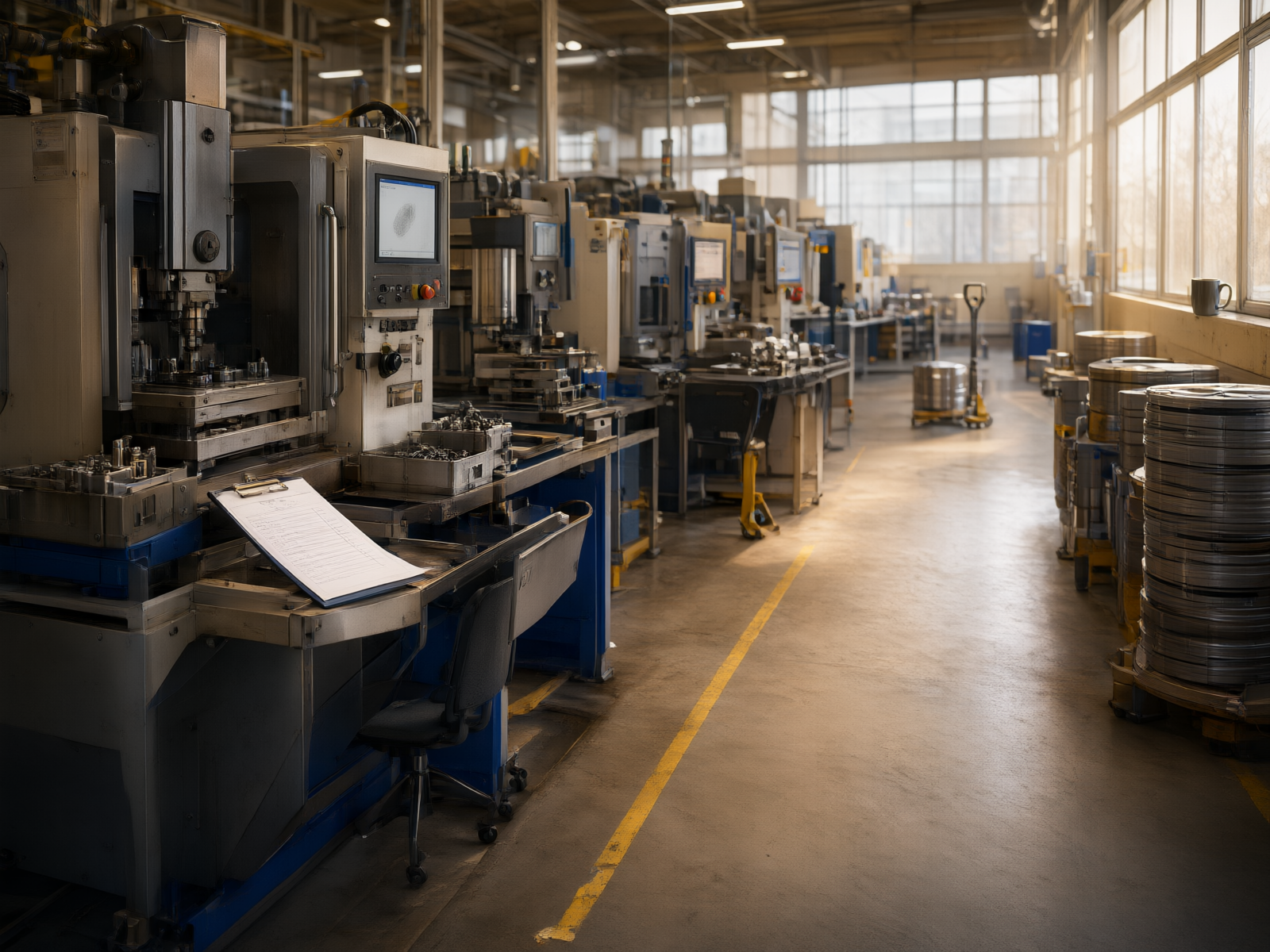
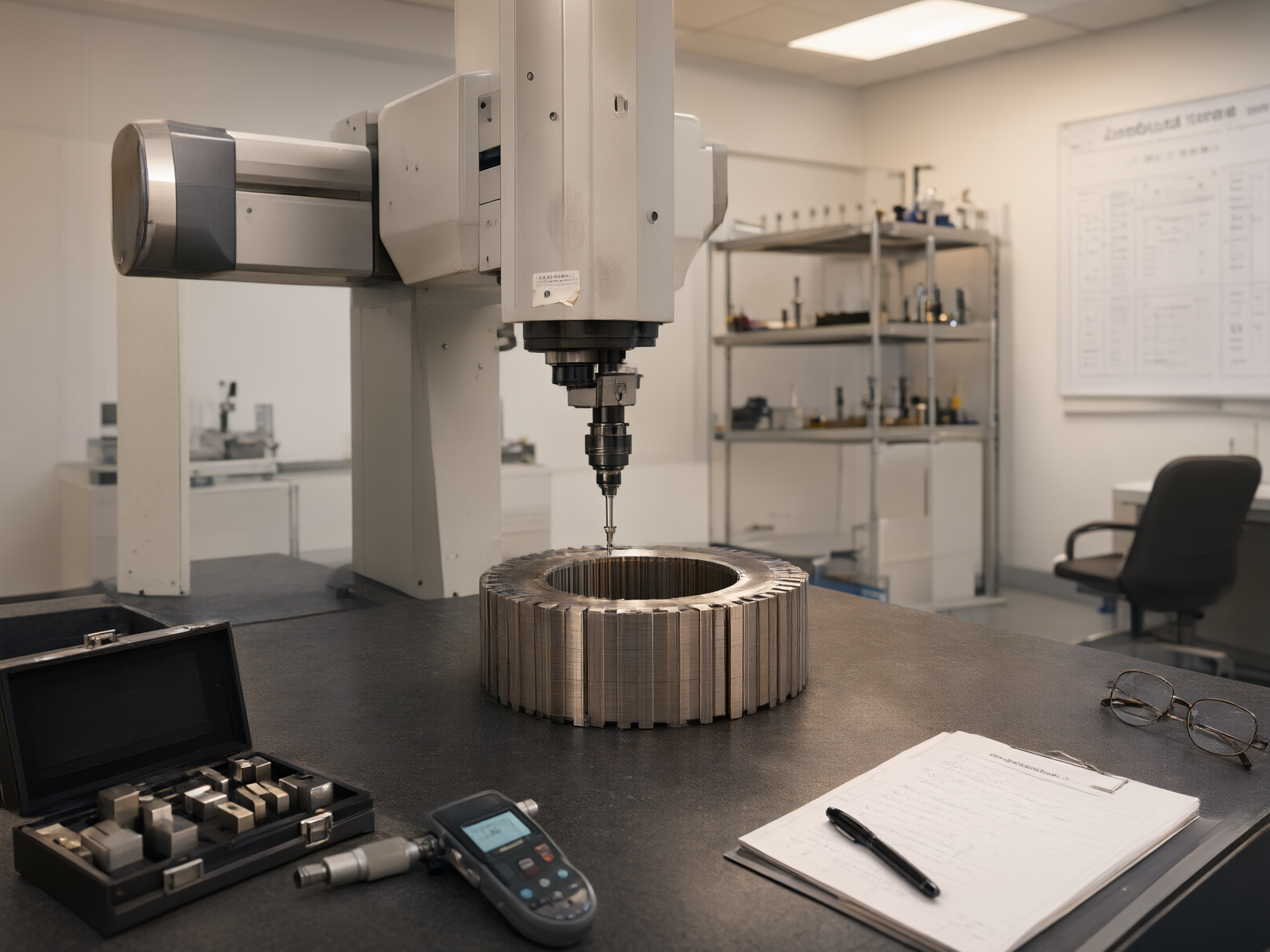
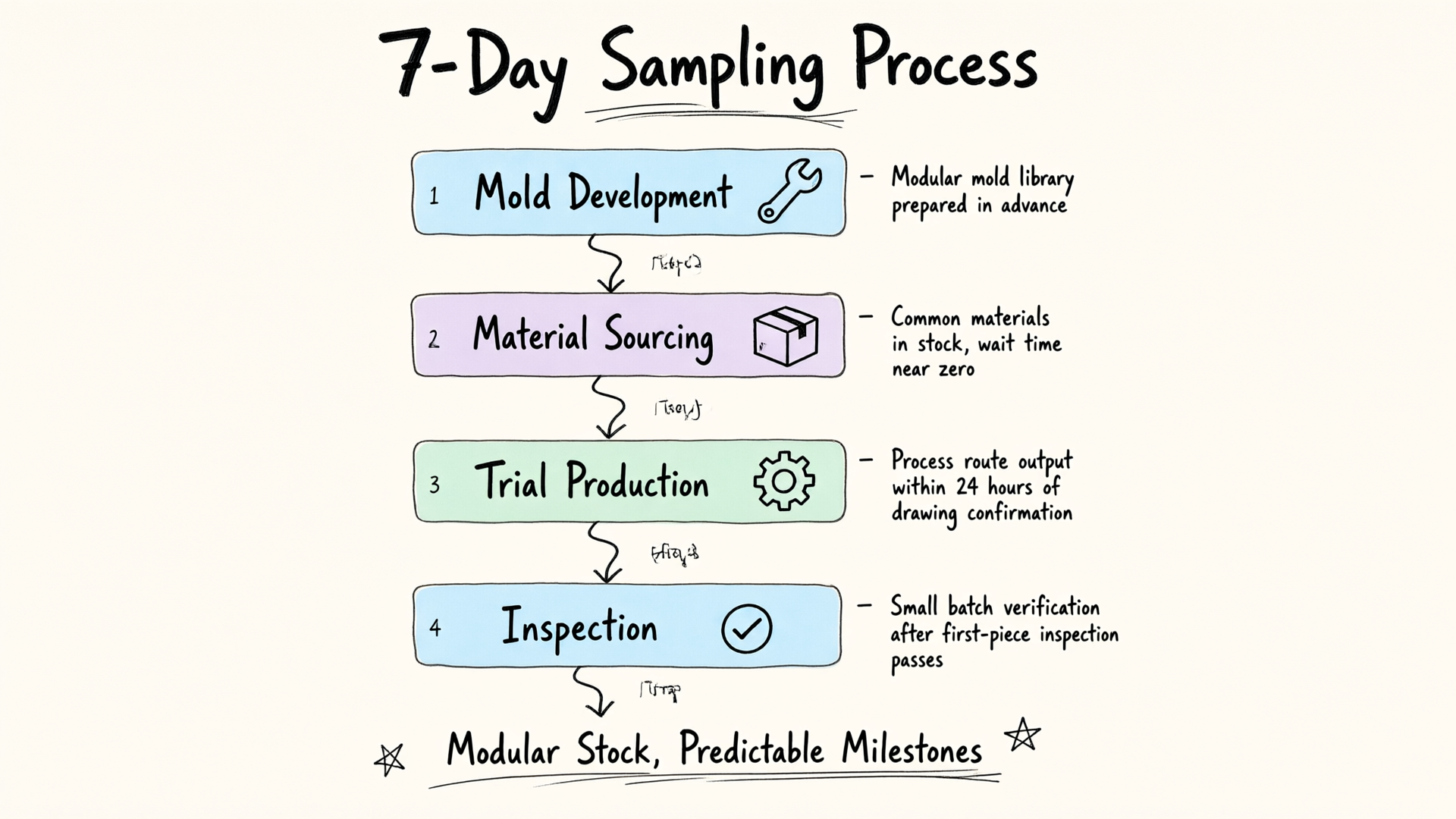
Improving motor energy efficiency levels fundamentally reflects enhanced control over core losses. During the procurement of stator and rotor cores, the selection of silicon steel grades and the quality of stacking processes directly determine magnetic performance, which in turn dictates the overall motor's energy efficiency rating.
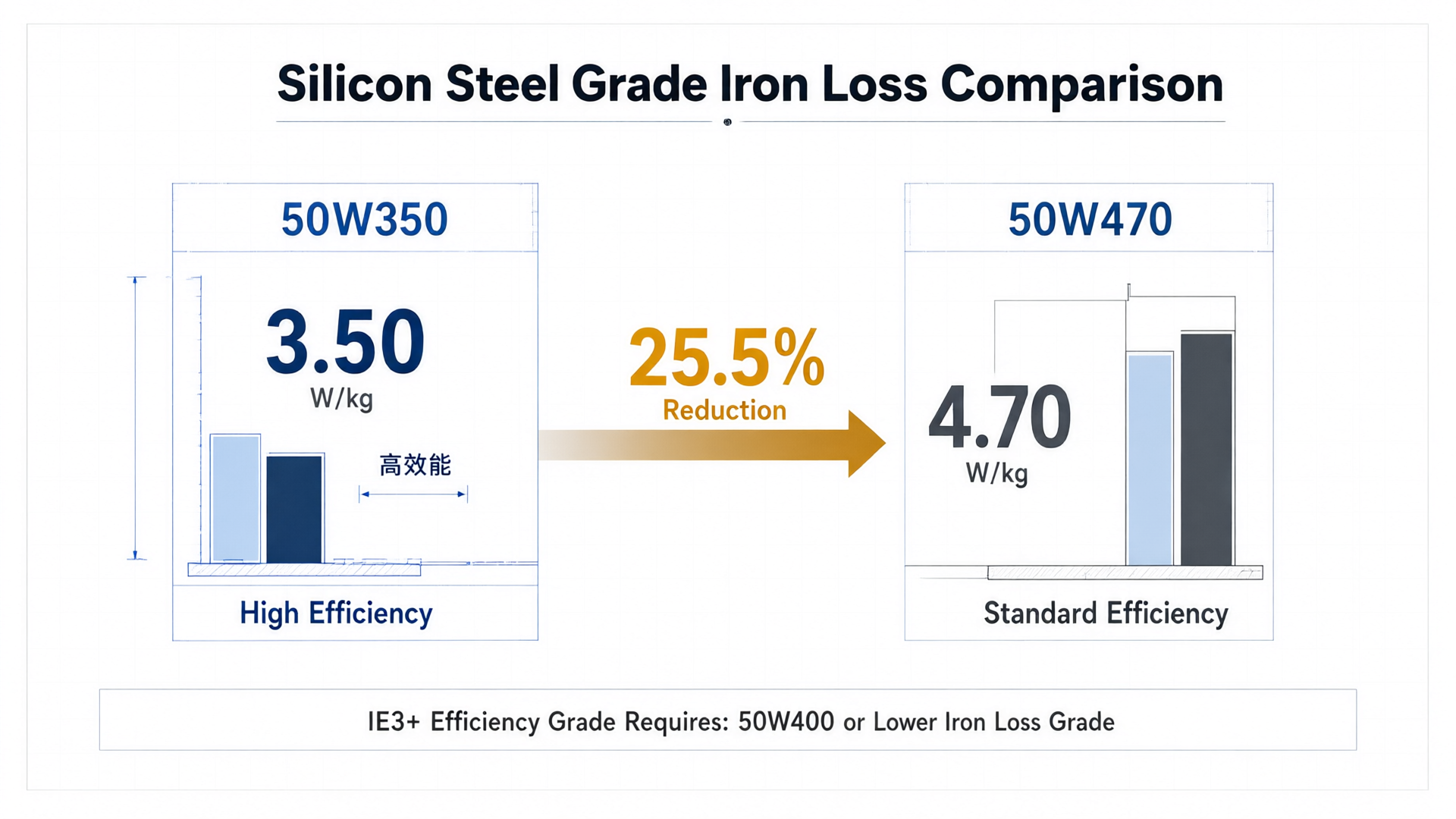
The key difference between silicon steel grades lies in their core loss values. For common grades, 50W470 has a core loss of approximately 4.70 W/kg, while 50W350 drops to 3.50 W/kg—a reduction of 25.5%. Lower core loss translates to higher energy conversion efficiency during motor operation. Motors with IE3 or higher efficiency ratings typically require silicon steel grades like 50W400 or lower. If procurement focuses solely on unit price and overlooks grade differences, the final product may fail to meet efficiency standards, leading to rework or material replacement and ultimately increasing total costs.
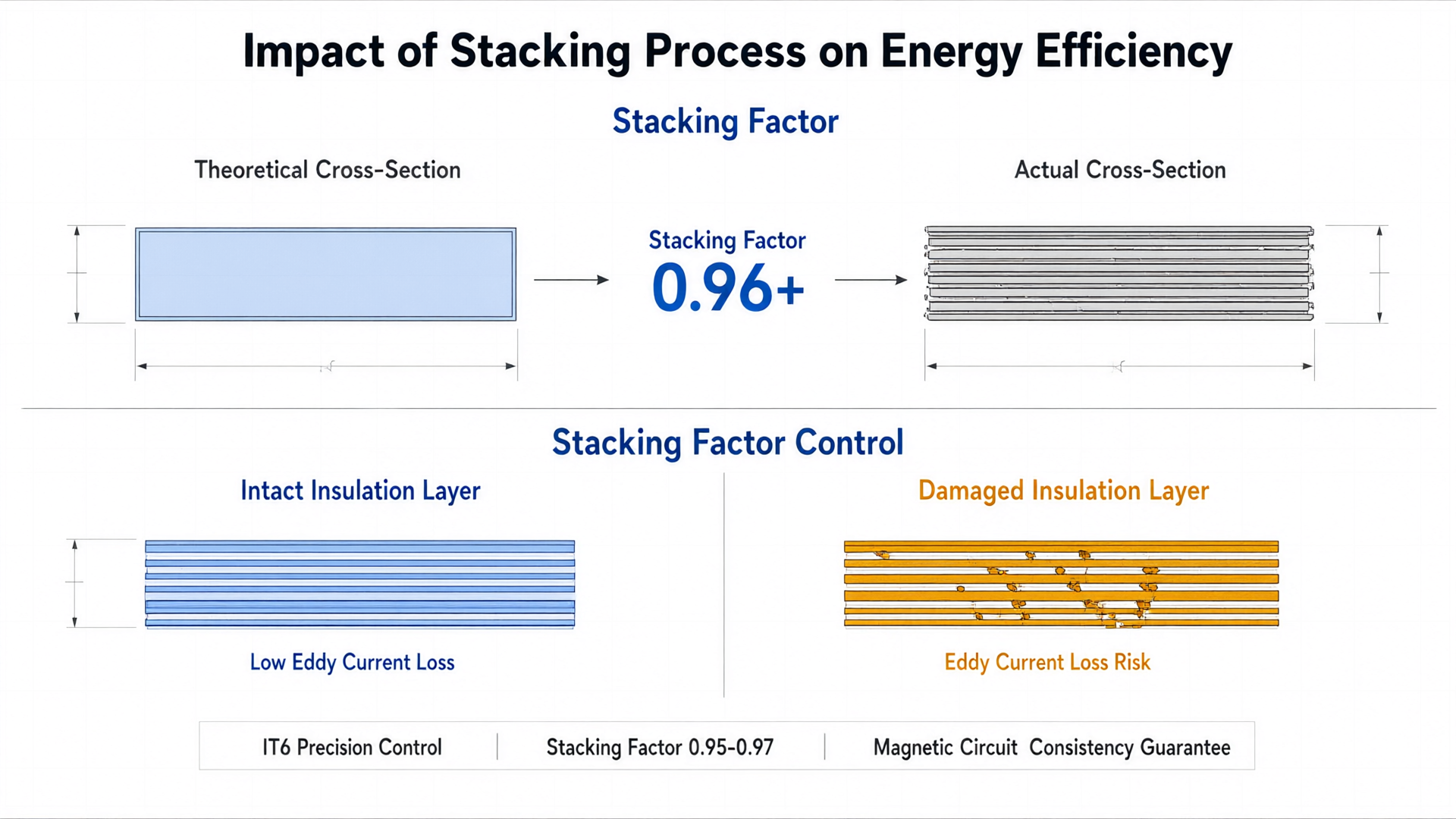
The impact of stacking technology on energy efficiency manifests in two dimensions. First is the stacking factor, defined as the ratio of the iron core's actual cross-sectional area to its theoretical area. High-precision stacking can maintain a stacking factor above 0.96, minimizing air gaps and ensuring uniform magnetic flux distribution. Second is inter-lamination insulation quality; damage to the insulation layer or uneven pressure during stacking can generate additional eddy current losses. In our stator and rotor machining processes, we enforce IT6 precision control, maintaining a stable stacking factor within the 0.95-0.97 range to ensure magnetic circuit consistency. For bulk buyers, process stability across batches is more critical than single-piece accuracy—fluctuations between batches can cause energy efficiency ratings for the same motor model to diverge.
From a procurement decision perspective, silicon steel grade and stacking process must be evaluated together. Using high-grade silicon steel with a low-precision stacking process will negate its iron loss advantages due to process defects; conversely, an advanced stacking process cannot overcome the performance limits of low-grade materials. We recommend that buyers require suppliers to provide both material certification and stacking process parameters during technical acceptance, along with sampling for iron loss testing verification.
Stator and rotor cores are the heart of electric motors; every material selection and processing step directly impacts final energy efficiency. Understanding how silicon steel grades and lamination processes work enables purchasers to strike a more precise balance between cost and performance.
20 years of motor industry technical expertise, leading hundreds of stator and rotor core customization projects. Proficient in international standards such as IEC and GB, with specialized skills in precision stamping process optimization and IT6 tolerance control.