Motor buyers frequently encounter a critical issue when accepting stator and rotor laminations: suppliers declare parts as compliant, yet issues like excessive vibration, abnormal noise, or efficiency degradation arise after installation. The root cause lies in relying solely on "drawing specifications" for acceptance without established, quantifiable testing criteria. We break down the logic for defining technical acceptance standards by focusing on two core metrics.
Acceptance Disassembly for IT6 Tolerance Grade
IT6 is the tolerance grade defined in ISO 286. It denotes an extremely narrow tolerance zone—for instance, a 50 mm bore hole has an IT6 tolerance of only 0.016mm. Achieving IT6 grade on the stator and rotor core's outer diameter, inner diameter, and stacked thickness ensures controlled fit clearances and uniform magnetic paths, directly determining motor efficiency and temperature rise performance.
When setting acceptance criteria, buyers must define three key elements. First, the inspection reference plane and measurement method: whether to use a shop-floor CMM or pneumatic comparator, as system errors between different equipment can exceed 0.005mm. Second, sampling ratio and acceptance rules: when 100% inspection is too costly, apply AQL sampling, but also specify how non-conforming lots are handled—returned for rework or downgraded acceptance. Third, lot consistency requirements: individual part compliance does not guarantee batch stability; add a constraint of process capability index Cpk ≥ 1.33 to ensure supplier process control.
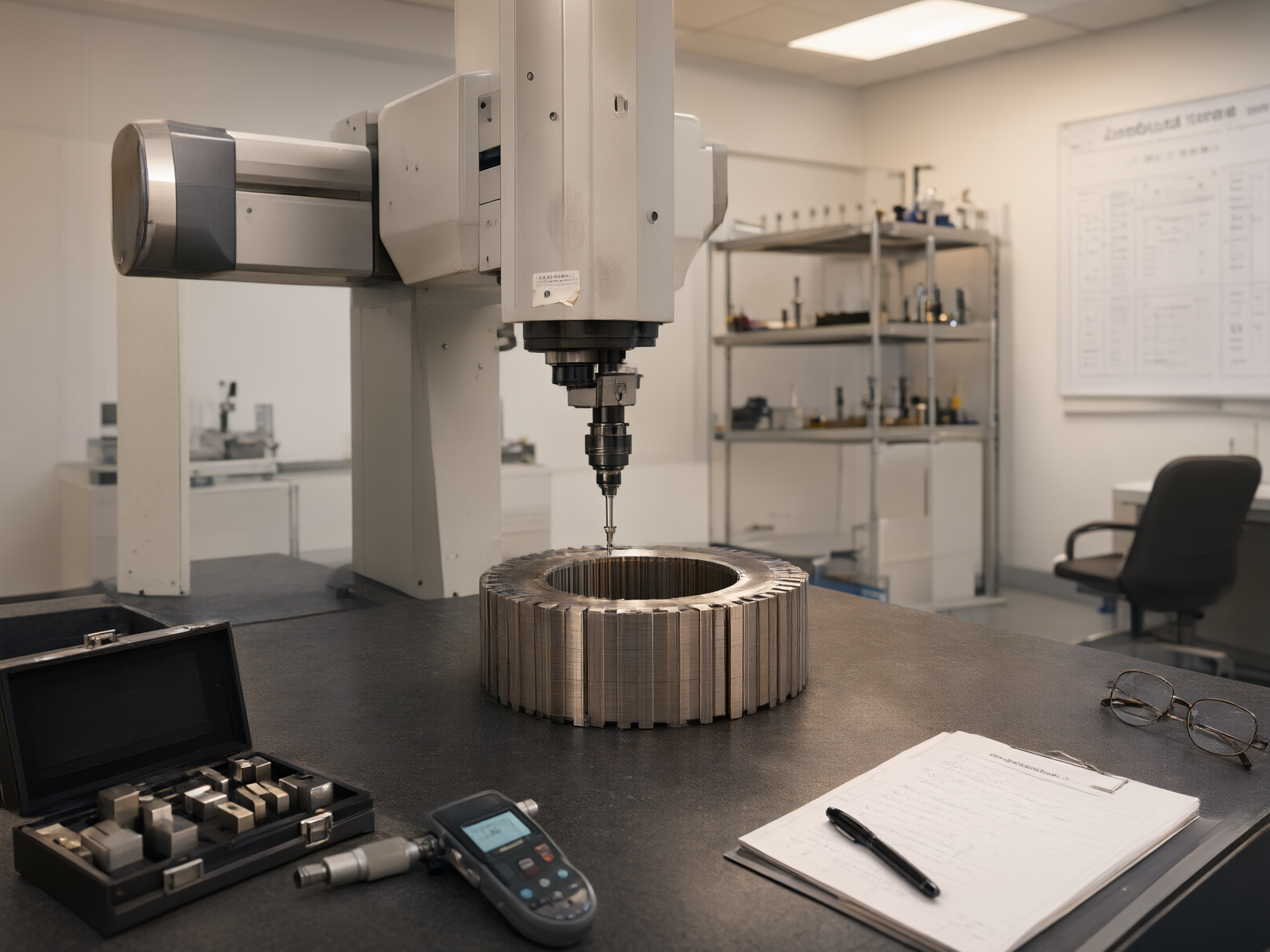
In collaboration with European motor manufacturers, we observed that mature buyers include IT6 requirements in the "Critical Characteristics" list of technical agreements, accompanied by an FAI (First Article Inspection) report template. They require suppliers to submit full-dimensional inspection data before mass production, rather than relying solely on outgoing quality inspections.
G2. Validation logic for 5 dynamic balancing
G5 is the rotor balance quality grade defined by ISO 1940. Lower values indicate lower residual unbalance. For a motor operating at 3000rpm, G5 requires that residual unbalance be kept within specified limits; exceeding them can cause premature bearing wear and structural fatigue.
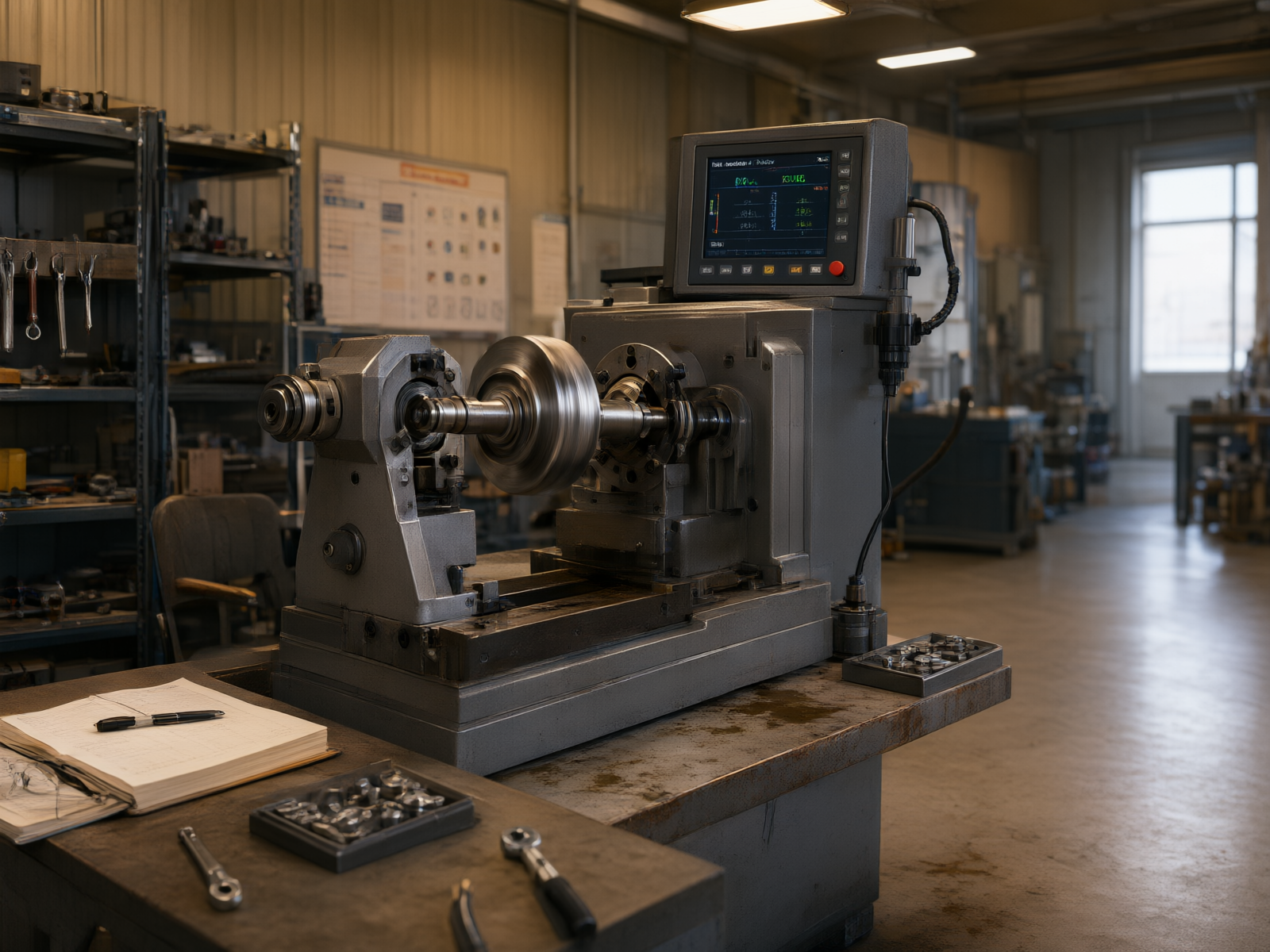
The key to acceptance is distinguishing between "factory balance" and "balance after installation." Some suppliers perform dynamic balancing with the optical axis only, but mass distribution changes after installing the fan and coupling, reducing balance accuracy. Purchasers must specify in the technical agreement that balance verification occurs in the final assembled state, with data comparing initial and residual unbalance provided. The testing equipment's precision must also match: the balance machine's minimum achievable residual unbalance should be less than 1/5 of the allowable value; otherwise, test results are unreliable.
Another easily overlooked dimension is the speed range coverage. Since actual motor operating speeds may deviate from rated values, acceptance should require suppliers to perform multi-speed balancing verification across 1.0 to 1.2 times the rated speed to prevent excessive vibration due to operational shifts despite passing single-speed tests.
Systematic approach to risk mitigation
Adopting IT6 precision and G2.5 dynamic balancing as acceptance criteria is just the beginning. Buyers must establish a complete closed-loop process spanning technical agreement signing, first-article confirmation, in-process monitoring, and pre-shipment sampling. The technical agreement should specify the referenced versions of inspection standards (e.g., ISO 286-1:2010, ISO 1940-1:2003), the dispute arbitration body, and the rules for bearing retest costs.
Our experience in supply chain services shows that the more specific acceptance criteria are, the fewer disputes arise later. A technical agreement detailing testing methodologies, sampling rules, and process capability requirements is far more effective for risk mitigation than contract clauses that simply specify "IT6" or "G2.5".
20 years of motor industry technical expertise, leading hundreds of stator and rotor core customization projects. Proficient in international standards such as IEC and GB, with specialized skills in precision stamping process optimization and IT6 tolerance control.