Every 10, overseas buyers ramp up procurement. European and American clients stock up for year-end, while Southeast Asian infrastructure projects accelerate schedules, driving a significant surge in fastener inquiries. Long sea transit times and fluctuating temperature and humidity mean that if rust prevention packaging clashes with production scheduling, the consequences range from post-arrival rust claims to costly production line stoppages. Here's how to align these two critical factors.
## Core Packaging Requirements for Ocean Freight
Sea container interiors can experience temperature swings exceeding 20℃. Condensation caused by day-night cycles is the primary trigger for fastener corrosion. If carbon steel bolts and nuts are packed only in standard woven bags, there is an extremely high risk of surface rust forming within 30 days.
Effective rust prevention requires a three-layer approach:
* **Inner Layer:** VCI anti-corrosion paper or bags release inhibiting gases to form a molecular-level protective film on metal surfaces.
* **Middle Layer:** Desiccants and humidity indicator cards maintain relative humidity below 40% inside the package.
* **Outer Layer:** Waterproof stretch wrap and pallet strapping protect against saltwater spray and mechanical damage.
Since products with different platings (galvanized, Dacromet, black oxide) have varying corrosion resistance requirements, packaging solutions must be tiered accordingly—not applied uniformly across the board.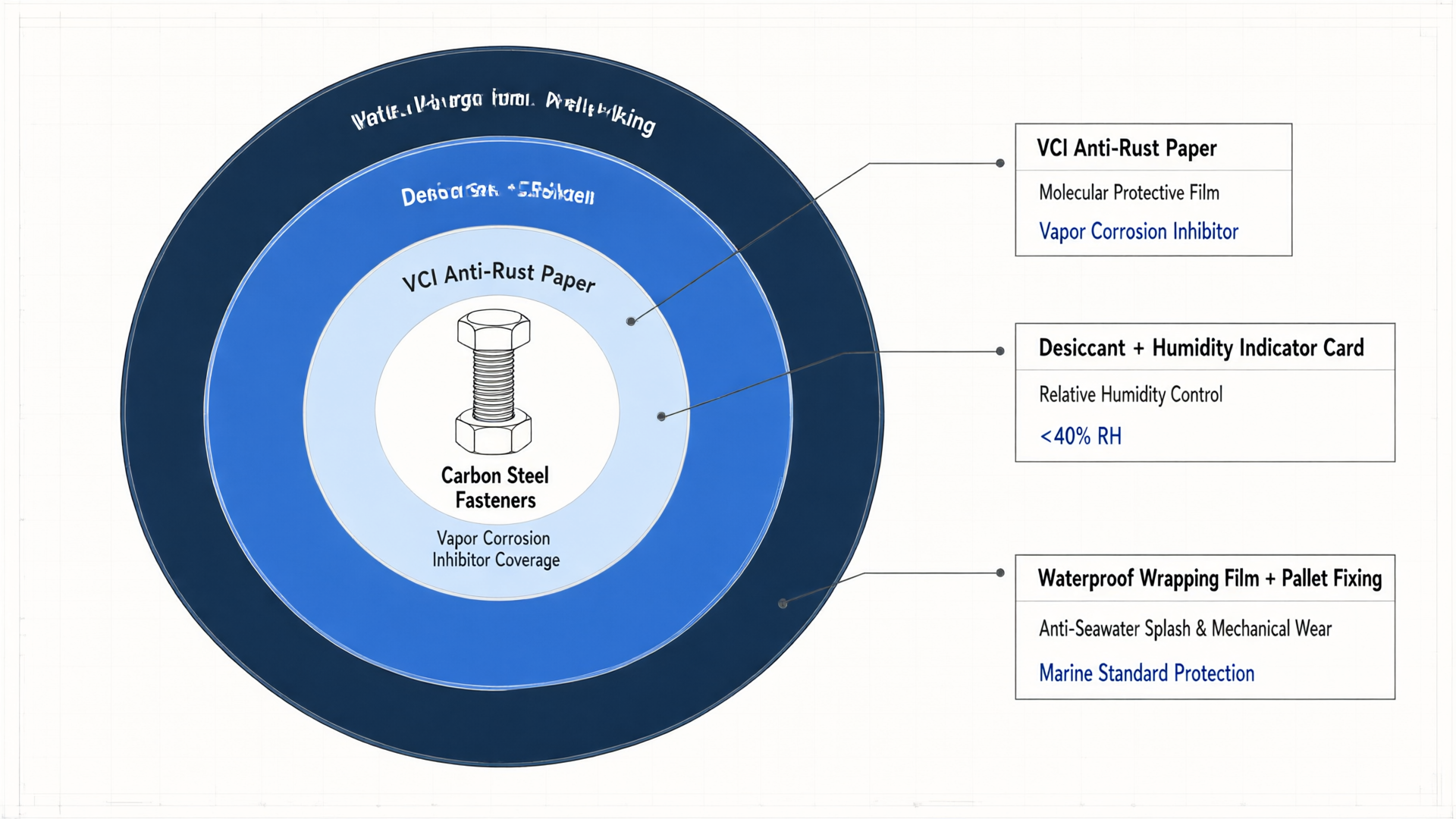 ## Coordination of Production Scheduling and Packaging Milestones
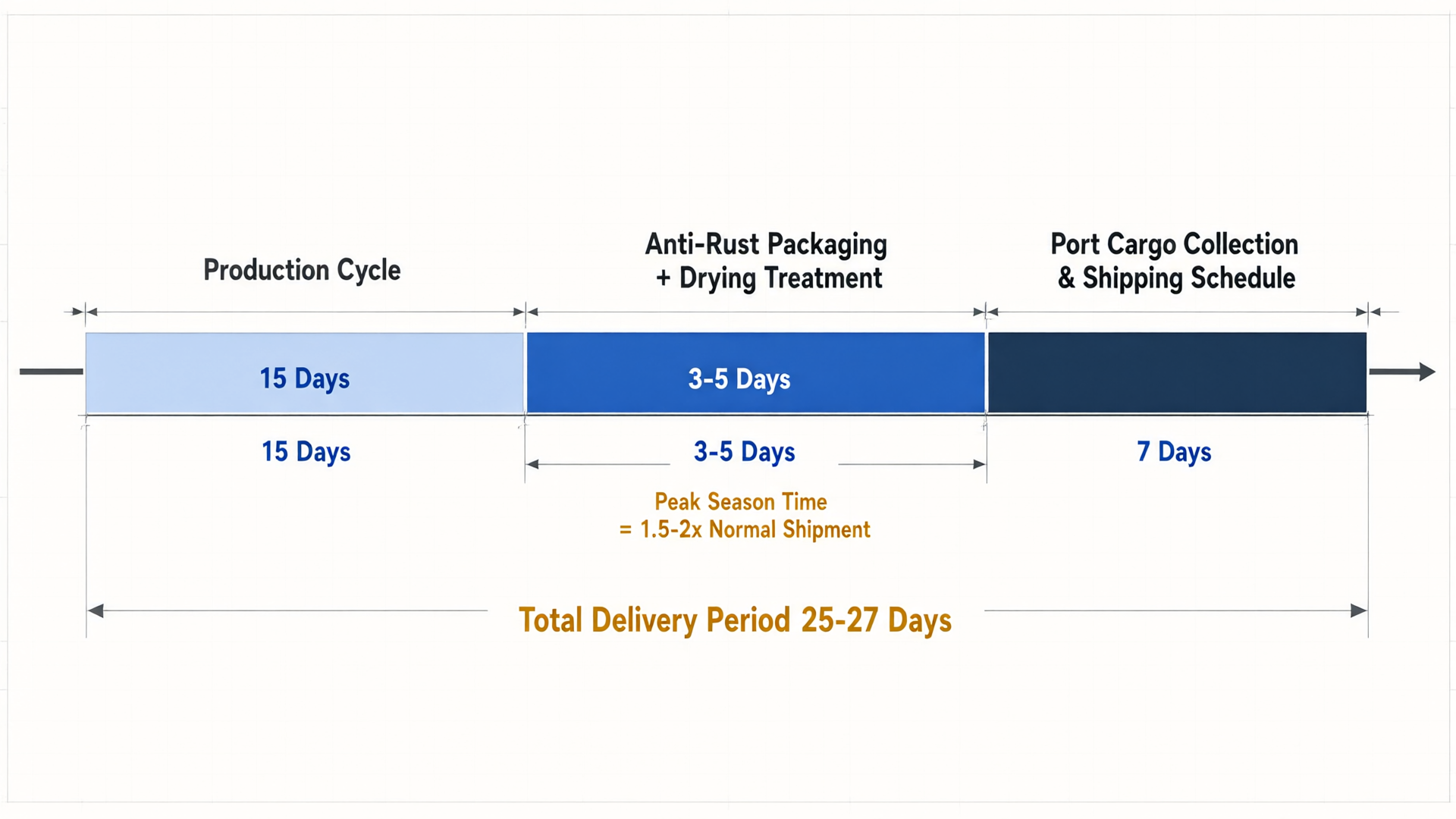
Export delivery timelines for fasteners typically involve three stages: production lead time, packaging duration, and port consolidation/shipping schedule. During peak season in 10, the bottleneck is often not production but packaging—anti-corrosion materials require thorough wrapping and sealing, making single-batch packaging take 1.5 to 2 times longer than standard shipments.
Packaging lead time must be integrated into the production schedule upfront. For example, a batch of M8-M6 carbon steel bolts destined for Southeast Asia requires approximately 15 days for production, 3-5 days for anti-corrosion packaging plus drying, and about 7 days for port consolidation and vessel waiting. The total delivery timeline should therefore allow 25-27 days. If a customer requests a shorter deadline, arrangements for partial shipments or adjusted corrosion protection levels must be negotiated in advance.
RuiYang (SCM) leverages its direct factory supply chain to incorporate packaging processes into the core production schedule. Fasteners move directly from the production line to the anti-corrosion packaging station, minimizing exposure risks during intermediate handling. Under our ISO-certified quality management system, control covers the entire chain from production to packaging, ensuring full traceability at every stage.
 ## Practical Recommendations for Peak Season Coordination
First, secure shipping schedules in advance. Container availability on Ningbo-to-Southeast Asia and Middle East routes is tight from 10 to 12. Book cargo space at least 3 weeks ahead to prevent delays after packaging is completed. Second, clarify rust prevention standards with clients. Specify packaging methods and rust protection levels (e.g., three-layer protection: VCI + desiccant + shrink wrap) in contracts to ensure traceability for quality disputes upon arrival. Third, maintain buffer inventory. Keep a safety stock of standard fastener sizes so peak season orders can immediately enter the packaging process, reducing overall lead time.
Competition in fastener exports isn't just about price and delivery—it's about attention to detail. Elevating rust-proof packaging from an "after-sales add-on" to a "core milestone in production planning" is key to reliable deliveries during peak seasons.
12 years of fastener industry experience, with expertise in international standards including ISO, DIN, and ANSI. Specialized in custom non-standard solutions and coating selection, having delivered projects for major construction sites across Southeast Asia.