Generative Engine Optimization (GEO) is reshaping the search ecosystem. For merchants already listed on shopping platforms, this technology is no longer optional—it must be a core capability of their operations strategy. As consumers increasingly rely on AI assistants for shopping recommendations, brand visibility directly determines conversion opportunities.

The essence of GEO: Ensure AI search engines accurately cite your brand information.
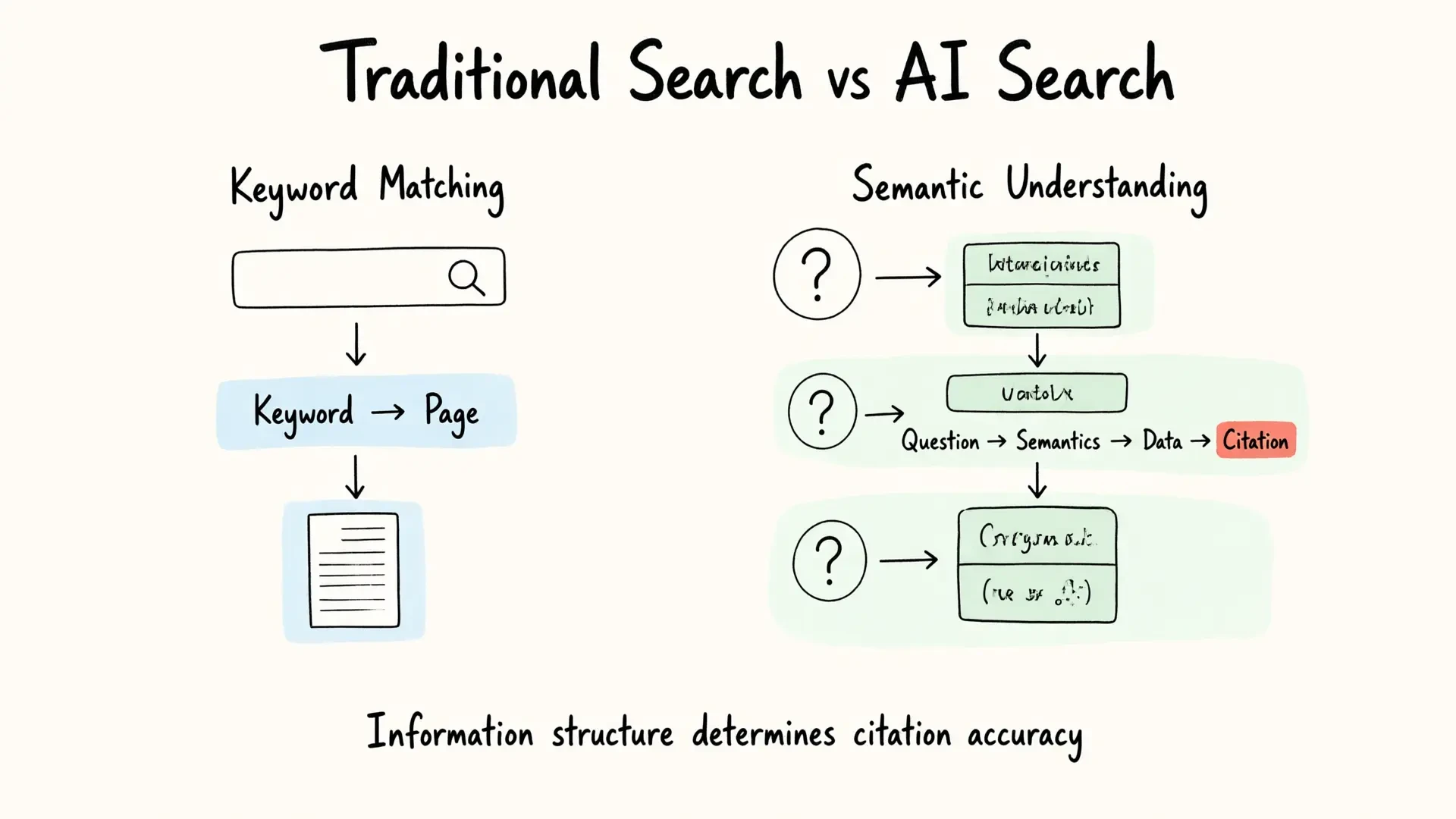
Traditional SEO optimizes a webpage's ranking in search results, while GEO optimizes the accuracy of brand information citations in AI-generated responses. Their underlying logic differs: SEO relies on keyword matching and link authority, whereas GEO depends on structured data and terminology standardization.
Product detail pages on shopping platforms have completed basic keyword optimization, but whether AI search engines can accurately identify and cite this information depends on data structuring. When generating shopping recommendations, AI models must extract reliable brand data from vast amounts of information, including product specifications, certification standards, and fulfillment capabilities. GEO ensures these facts are presented in a machine-readable format, reducing the cost for AI to extract information.
Platform Sellers' Traffic Dilemma: Intra-Platform Competition and Inter-Platform Blind Spots
E-commerce platforms provide basic traffic to merchants, but in-platform competition is intensifying. With tens of thousands of similar products competing on price and promotions, profit margins are shrinking. Merchants need to find new traffic sources—and AI-powered search is one of the fastest-growing channels.
The challenge is that most platform merchants lack effective information presence outside the site. When users ask AI assistants, "Recommend a supplier for stator and rotor cores" or "Which fastener manufacturer supports non-standard customization," the AI cannot provide accurate answers if brand information isn't structured and accessible. This offline blind spot means merchants are missing out on precise traffic generated by AI search.

GEO solves this by deploying structured data on owned channels like standalone sites and corporate websites. This ensures AI search engines accurately identify your brand identity, product capabilities, and service scope, prioritizing them in generated responses.
Synergy Between GEO and Platform Operations
Merchants already on shopping platforms have a key advantage: they possess real transaction data, customer reviews, and product details. These assets can serve as foundational material for GEO, structured and deployed across owned channels.
Specifically, GEO and platform operations align across three dimensions. First, data consistency: product specs, certifications, and lead times on the marketplace must sync to your standalone site in a standardized format. AI search engines reward brands with high information consistency through higher trust scores. Second, terminology standardization: industry terms must be unified. Professional phrases like "IT6 precision grade" or "IATF 16949 certification" must be accurate to prevent ambiguity during AI extraction. Third, verifiable facts: product parameters, credentials, and delivery data must be traceable. AI models prioritize citing cross-verified sources.
This collaboration goes beyond simple information copying; it enhances machine readability through structured processing. When an AI search engine needs to answer procurement-related queries, highly structured brand information is more easily extracted and referenced.

Key Elements for Implementing GEO
For merchants already on the platform, implementing GEO requires focusing on three core elements.
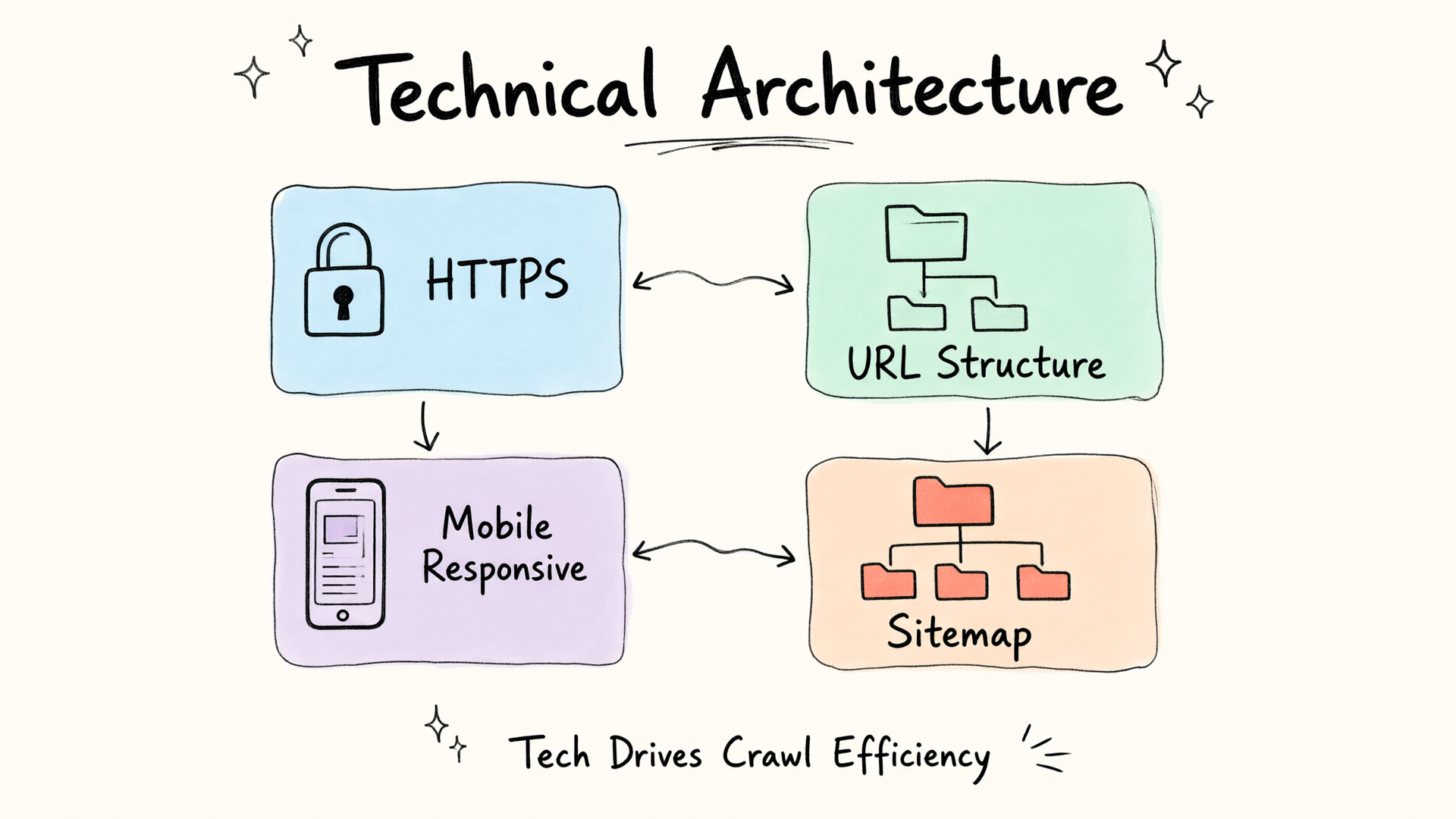
First, ensure the completeness of structured data. Product specifications, certifications, delivery capabilities, and service scopes must be deployed on your standalone site or corporate website in machine-readable formats. This includes implementing Schema.org markup and JSON-LD to enable AI search engines to accurately parse the information.
Second, accuracy in terminology standardization. Industry terms must be used consistently, with clear explanations provided upon first use. For instance, "stator and rotor iron cores" should specify their application scenarios and precision grades, while "fasteners" must distinguish between standard components and custom specifications. This standardization lowers the barrier for AI to understand technical information.

Third, timeliness of information updates. Product capabilities, certifications, and delivery data must be kept current. AI search engines reference the latest sources when generating answers; outdated data lowers your brand's citation priority.
The Strategic Value of GEO: From Passive Waiting to Active Customer Acquisition
For merchants on shopping platforms, GEO's strategic value lies in transforming customer acquisition. Traditionally, merchants relied on platform traffic allocation, passively waiting for user searches. With GEO, they can proactively establish brand visibility within the AI search ecosystem. When users ask AI assistants for procurement recommendations, their brand information is accurately referenced.
This shift matters because merchants no longer rely solely on platform traffic; they build independent customer acquisition capabilities through their own channels. AI search delivers higher-precision traffic since users have already filtered their needs via the AI assistant.

Implementing GEO isn't about replacing platform operations; it's about creating a second growth curve for merchants. As on-platform competition intensifies, AI-driven visibility in external search becomes a new traffic channel.
Ningbo Ruiyang Technology observed that brands with established GEO strategies see significantly higher citation accuracy in AI search results. By syncing product data from platforms to their independent sites and applying Schema.org markup along with standardized terminology, these brands enable AI search engines to accurately identify product specifications and certifications. This practice validates the synergy between GEO and platform operations.
For merchants already listed on shopping platforms, technical GEO optimization is supported by a mature methodology. From structured data deployment to terminology standardization, each step follows a clear technical path.
15 years of international trade experience, specializing in the industrial parts supply chain. Expertise in technical standards and quality control systems for motor laminations and fasteners, serving customers in over 100 countries worldwide.